

A Comprehensive Safety & Compliance Guide for EV Owners in Malaysia — by Adam
Introduction: EV Growth Is Accelerating — Safety Cannot Lag Behind
Electric vehicles (EVs) are rapidly becoming part of Malaysia’s transportation landscape. With rising fuel costs, expanding EV model availability, and strong government incentives, more Malaysian homeowners and businesses are transitioning to EVs.
However, EV charging is not comparable to normal household electrical usage. EV chargers operate at sustained high current for long periods, making safety, certification, and professional installation absolutely critical.
At Energi Elite, we prepare this report not just as installers, but as safety advocates. This guide explains Malaysia’s EV charging ecosystem, regulatory requirements, and best practices — supported by official guidelines, legal frameworks, and international standards.
Legal & regulatory references:
- Electricity Supply Act 1990 (Malaysia)
- Suruhanjaya Tenaga (Energy Commission) EV Charging System (EVCS) Guidelines 2025
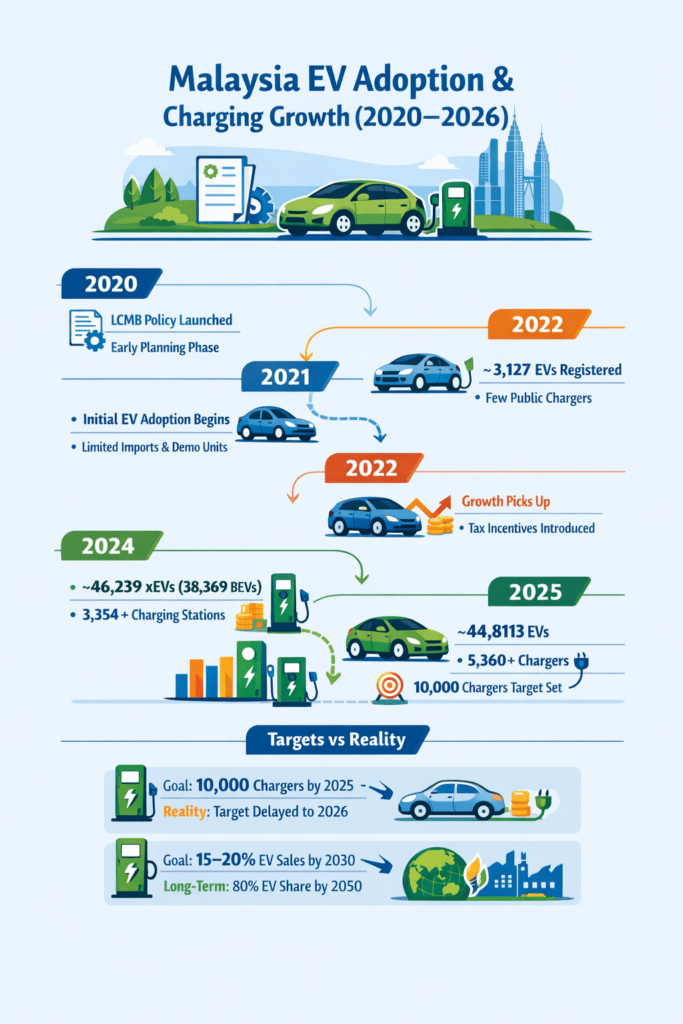
EV Charging Infrastructure in Malaysia (2025–2026)
(Policy & data sources: National Energy Transition Roadmap – NETR, NST Online – EV Infrastructure Updates, Lowyat.NET – EV Charging Targets)
As of late 2025, Malaysia has approximately 4,000–5,000+ EV charging points, including public chargers at highways, shopping malls, offices, and a rapidly increasing number of residential home chargers.
The Malaysian government has set a target of 10,000 charging stations nationwide, reflecting a strong policy commitment to EV adoption. However, infrastructure growth remains uneven — concentrated mainly in Klang Valley and major urban centers.
From Energi Elite’s real-world installation experience, we observe that home EV charging now accounts for the majority of daily charging activity, making residential installation quality a key safety factor.
Legal & regulatory references:
- Ministry of Transport & Energy Commission EV infrastructure targets
- National Energy Transition Roadmap (NETR)
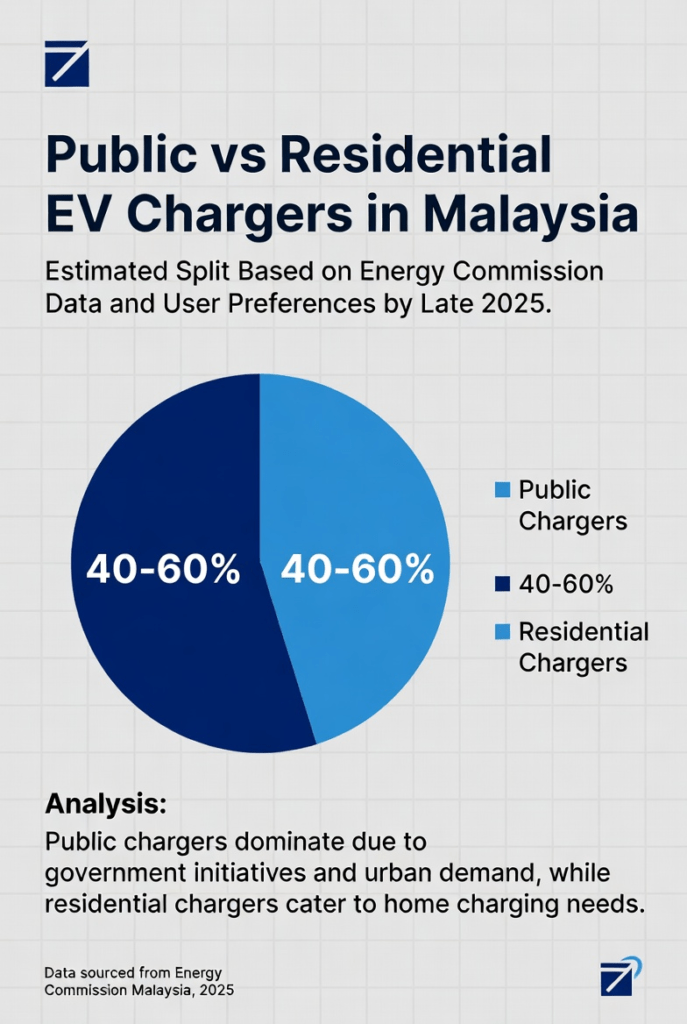
EV Adoption Comparison: Malaysia vs Norway — Lessons for Safety & Planning
(International comparison sources: Norway Official EV Policy, Roland Berger EV Charging Index)
Norway is globally recognised as the benchmark for EV adoption, with over 99% of new vehicle sales being electric and one of the world’s densest charging networks.
Malaysia, in contrast:
- EVs represent approximately 1% of total vehicle sales
- An estimated 25,000 EVs are currently on the road
This comparison is not about speed alone — it highlights the importance of early enforcement of safety standards, certified equipment, and professional installation. Norway’s success is strongly tied to strict compliance and high public awareness.
Legal & regulatory references:
- Norwegian EV policy framework (VAT exemption, toll incentives)
- Malaysian EV tax exemption and charging infrastructure incentives
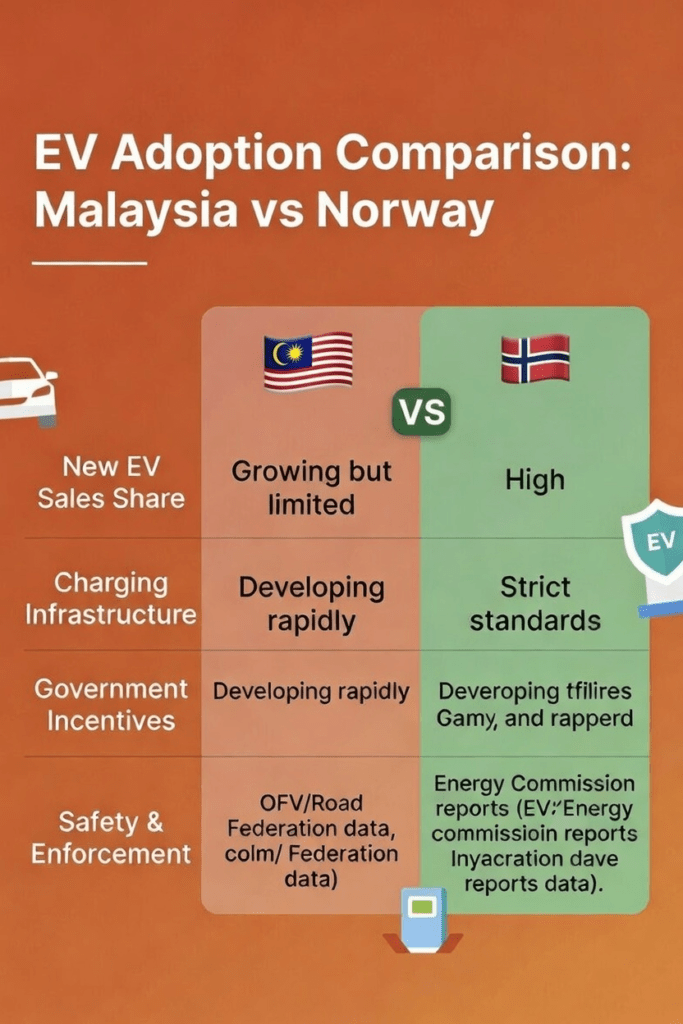
Why EV Charging Safety Is a National Concern
(Safety & enforcement references: Electricity Regulations 1994, Fire and Rescue Department Malaysia – Electrical Safety)
EV chargers are classified as high-load electrical equipment. Poor installation or non-compliant hardware can result in:
- Cable overheating due to undersized wiring
- Electric shock from inadequate earth protection
- Fire risks from missing RCCB or faulty connections
- Fire Risk from Inadequate Home Fuse Size
- Long-term damage to household electrical systems
During site inspections, Energi Elite frequently encounters unsafe practices such as:
- Direct connection without isolator switches
- Incorrect MCB ratings
- Incorrect House TNB Fuse Rating (Underpower)
- Non-certified chargers imported without approval
These risks prompted Malaysian regulators to introduce stricter EV charging regulations in 2026.
Legal & regulatory references:
- Electricity Regulations 1994
- Fire and Rescue Department of Malaysia (BOMBA) electrical safety advisories
Malaysia EV Charging Regulations & EVCS Guidelines (2025 to 2026 Onwards)
(Primary regulation: Suruhanjaya Tenaga – EVCS Guidelines 2025, Electricity Supply Act 1990)
In 2025, Suruhanjaya Tenaga released comprehensive EV Charging System (EVCS) Guidelines, legally reinforcing safety and compliance across the EV charging industry.
Key regulatory requirements include:
- ❌ Prohibition of Mode 1 charging (standard household socket)
- ✅ Mandatory use of approved and certified EV chargers
- ✅ Installation by competent, licensed electrical personnel
- ✅ Compliance with national wiring standards and protection devices
Failure to comply may result in penalties under the Electricity Supply Act.
Legal & regulatory references:
- EV Charging System (EVCS) Guidelines 2025
- Electricity Supply Act 1990
SIRIM Certification & IEC Standards Explained Simply
(Certification & standards: SIRIM QAS – EVCS Certification, IEC 61851, IEC 62196)
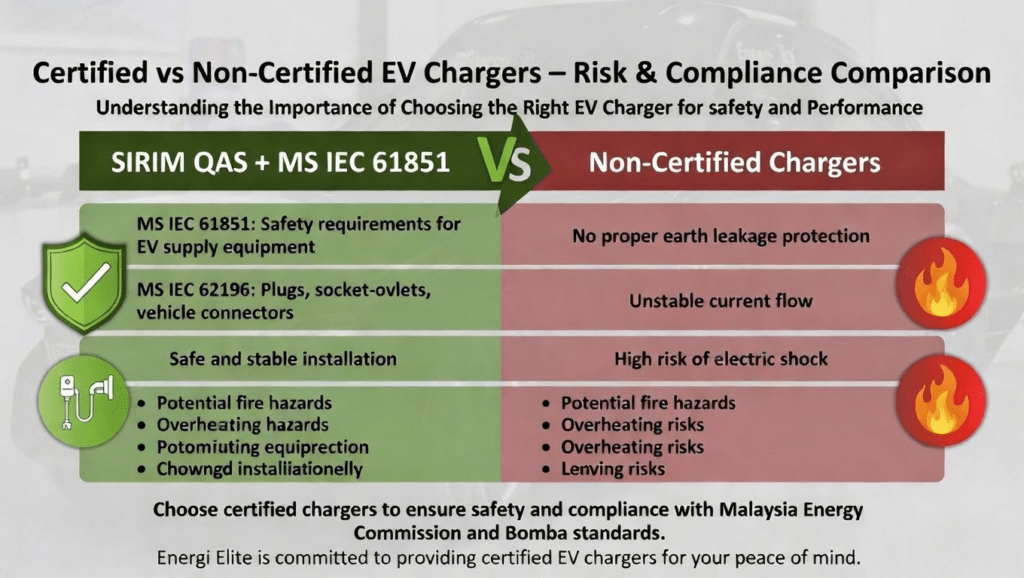
All legally installed EV chargers in Malaysia must undergo testing and certification by SIRIM QAS International and comply with international IEC standards.
Key standards include:
- IEC 61851 — EV charging system safety and performance
- IEC 62196 — Charging plugs and connectors (Type 2)
- IEC 62893 – EV Charging Cables
Certified chargers ensure:
- Proper earth leakage protection
- Stable current delivery
- Resistance to overheating and electrical failure
Energi Elite installs only certified Home EV chargers that comply with these standards.
Legal & regulatory references:
- SIRIM QAS EVCS certification framework
- MS IEC 61851 & MS IEC 62196 (Malaysian Standards)
Ongoing Safety Challenges in Malaysia
(Industry & enforcement references: Suruhanjaya Tenaga – Compliance & Enforcement, Digital News Asia – EV Infrastructure Challenges)
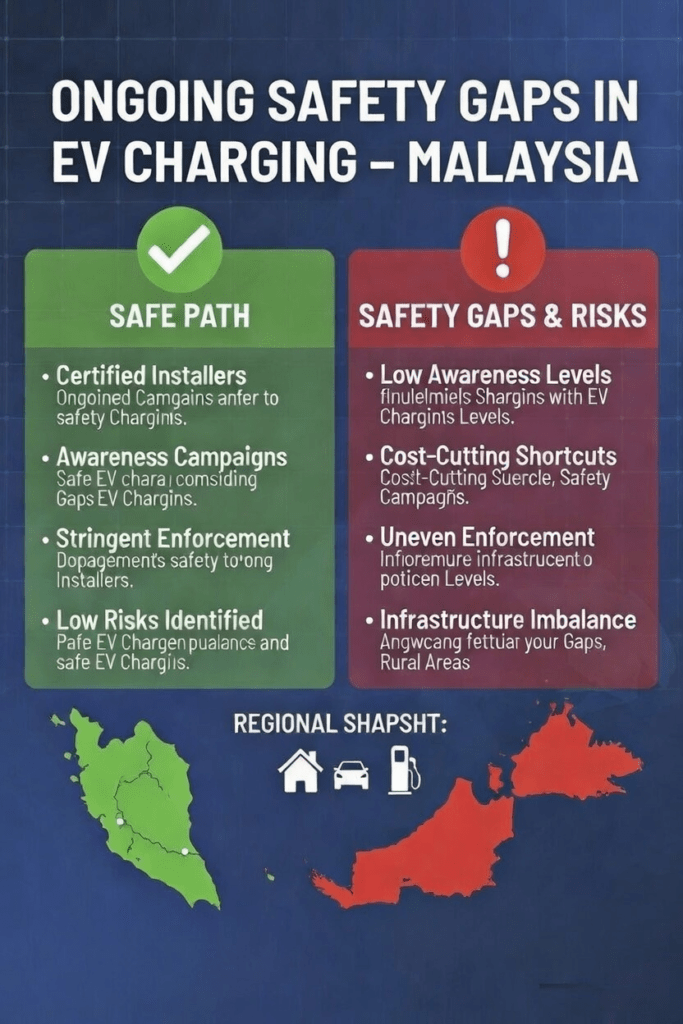
Despite strong regulations, challenges remain:
- Limited public awareness of EV charging risks
- Cost-driven shortcuts in some installations
- Uneven enforcement across regions
These gaps highlight the importance of choosing reputable installers with proven compliance records.
Legal & regulatory references:
- Energy Commission enforcement notices
- Industry safety audits and compliance reports
Practical EV Charging Safety Guidance for Homeowners
(Homeowner safety references: EVCS Home Charging Guide – ST, SIRIM QAS Safety Certification)
To ensure safe EV charging at home:
- Use only SIRIM Or Equivalent CE -approved chargers
- Engage licensed and experienced installers
- Ensure RCCB, MCB, and isolator switches are installed
- Avoid extension cords or adapters
- Schedule periodic safety inspections
Professional installation significantly reduces long-term risk and maintenance costs.
Legal & regulatory references:
- Malaysian Wiring Regulations
- EVCS homeowner safety advisories
Why Homeowners Choose Energi Elite
(Compliance framework applied: MS IEC 61851, MS IEC 62196, Suruhanjaya Tenaga EVCS Requirements)
Energi Elite Is Protons/Pronet Official Partner For Home EV Charger Installations and is committed to Safety-first Home EV Charger Installation, exceeding minimum requirements where necessary.
Our installation approach includes:
- Certified EV chargers only
- Licensed electrical professionals under ST
- Proper protection devices (RCCB, MCB, isolator)
- Clean, structured cable routing
- Full testing and commissioning
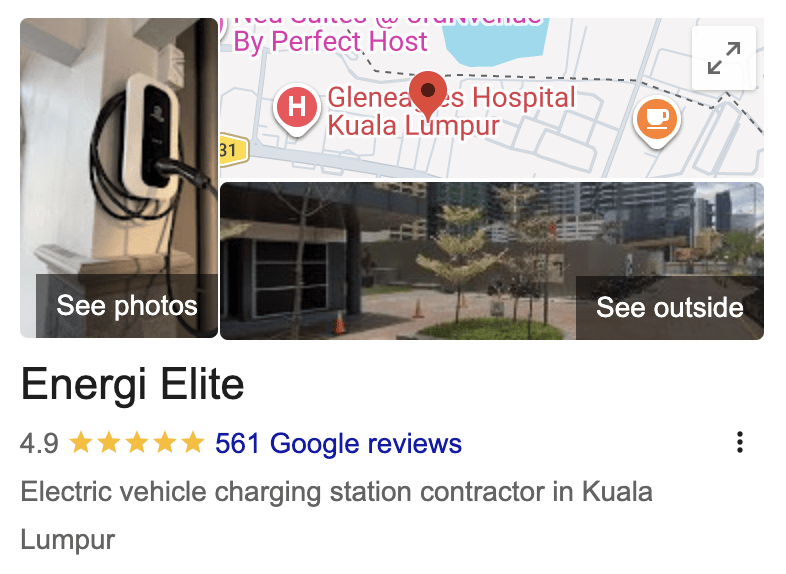
Trusted by 800+ customers, Energi Elite supports Malaysia’s EV transition responsibly
Customer Trust & Real Feedback
Customer experiences reinforce the importance of choosing compliant installers over cheaper, uncertified alternatives.
Final Thoughts: Building Malaysia’s EV Future Safely
Energi Elite has its own SafeCharge Standard which follows strict safety protocols for every house, condo, and commercial installation that they do to ensure 3 things .
3 Guarantees By Energi Elite
- Safety 1st at all cost.
- Long Term Solution & Future Proofing.
- Fastest After Sales Service in Malaysia.
Malaysia’s EV ecosystem is growing steadily, supported by strong policy direction and improving infrastructure. However, safety, certification, and professional installation remain the foundation of sustainable growth.
Energi Elite remains committed to delivering EV charging solutions that are safe, compliant, and future-ready, aligned with national regulations and international best practices.
👉 If you are planning a home EV charger installation, choose certified equipment and professional installation — choose the Safest in Malaysia – Energi Elite Home EV Installation.
